
Autumn was made for romanticising your business.
Can we build a business that feels more like a 90’s Rom-Com and less like the Hunger Games?
I have a theory that a lot of self-employed women have left corporate life only to accidentally recreate a slightly more chaotic version of it for themselves.
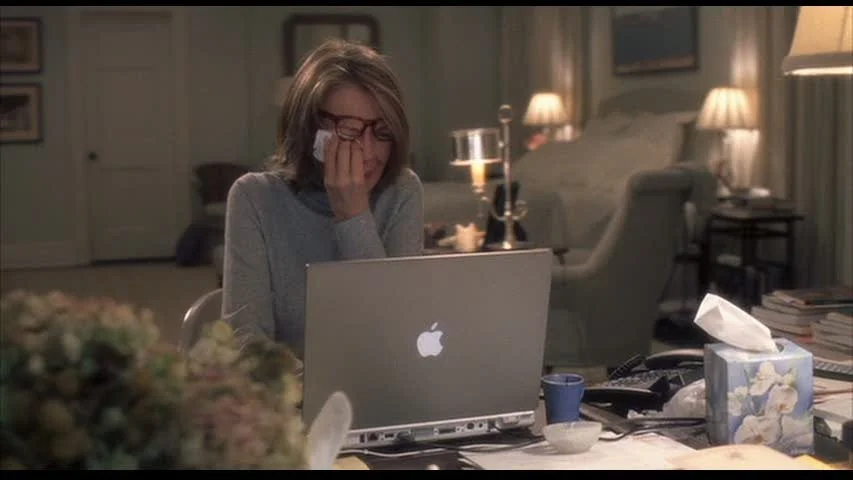
We left because we wanted more freedom, more flexibility and more control over how our days looked. We wanted to work with people we actually liked, take a random Wednesday afternoon off and build work around our lives rather than squeezing our lives into the few hours left over at the end of the day. But somewhere along the way, running a business became synonymous with being stressed all the time.
There might not be a manager breathing down your neck anymore, but there is an Instagram algorithm convincing you that if you don't post for three days everyone will forget you exist, and that everyone on planet earth is outperforming you by about 350%.
Nobody is forcing you to sit through an annual performance review, but you can check your followers, email subscribers, engagement and website traffic approximately 700 times a day if you'd like to ruin your own mood.
Nobody is telling you that you need to be online at 9am, and yet somehow you're checking Slack from bed before you've even brushed your teeth.
We got rid of the boss and replaced it with something worse, ourselves.
Everything feels equally urgent. We track our lives in quarters instead of seasons. January arrives and suddenly it's Q1 and there are targets to hit, offers to launch and content plans to execute. Before you know it, it's April and instead of noticing that spring has arrived you're wondering whether you're on track for your annual revenue goal.
And then there's the constant pressure to be visible. Post because you haven't posted today. Make a Reel because apparently Reels are doing well again. Start a newsletter. No, newsletters are dead. Start a Substack. Get on Threads. Make more video. Post more stories. Don't forget LinkedIn. Apparently we're all on YouTube now too.
At times, self-employment has started to feel less like the freedom we were sold and more like volunteering for the Hunger Games.
And I don’t know about you, but I'm increasingly uninterested in running my business like that.
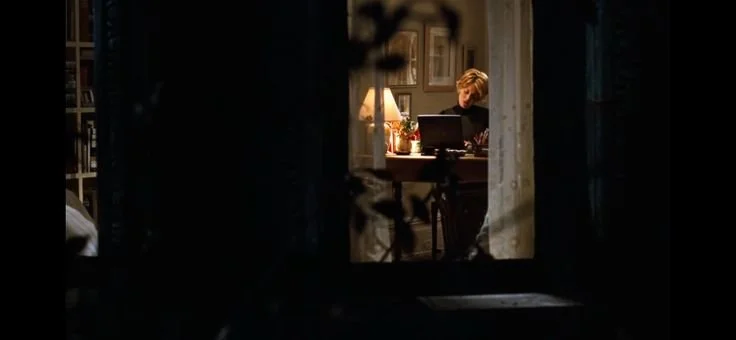
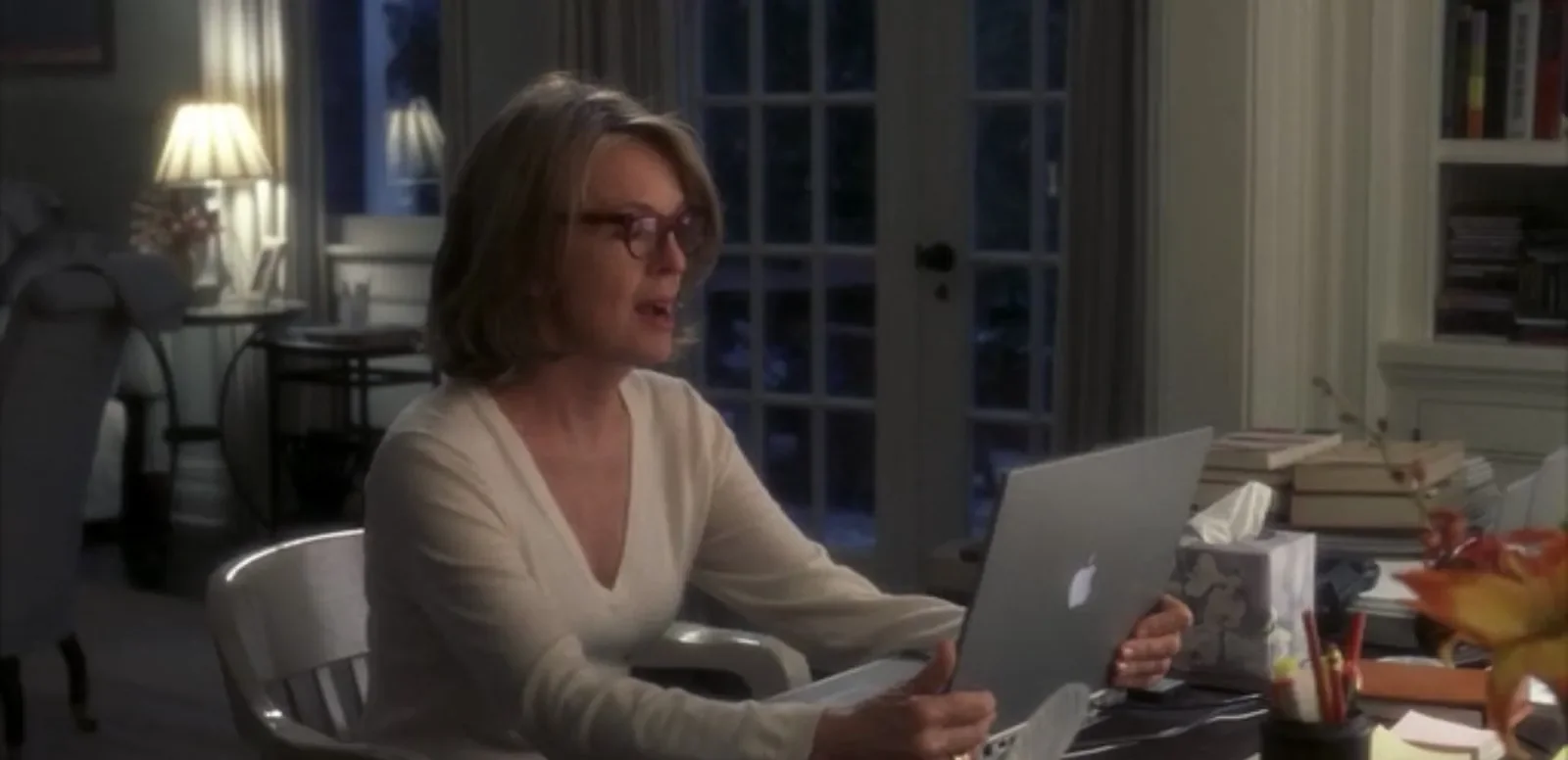
I'd prefer my working life to feel more like a 90s rom-com. More You've Got Mail, less frantically refreshing my Instagram engagement before breakfast.
And autumn feels like a particularly good time to start.
Why romanticise your business in the first place?
When I talk about romanticising your business, I don't mean pretending that running one is always lovely. Some parts of self-employment are boring. Sometimes clients are difficult, sometimes money is stressful and sometimes you have to spend two hours doing an admin task that no amount of candlelight is going to make enjoyable.
I'm also not suggesting that buying a nice notebook is the answer to burnout (although try and stop me buying one at every minor turning point in my life)
For me, romanticising my business is really about remembering that I get to have a say in what my working life feels like. It's deliberately noticing and using the freedoms that made working for myself so appealing in the first place, instead of gradually recreating all of the rules I wanted to escape from.
Because it's surprisingly easy to do that. When you work for yourself there is always something else you could be doing. There is no natural end to the workday because there will always be another email you could answer, another page of your website you could tweak, another piece of content you could create or another idea you could start. Without somebody else imposing limits on your working life, you have to be the person who decides where those limits are.
I think that's where a lot of us have gone wrong. We were so excited by the idea that we could work whenever we wanted that we accidentally created a situation where we felt like we should be working all the time.
Romanticising my business is a small rebellion against that. It's deciding that a successful day doesn't have to be the day where I squeezed the absolute maximum amount of productivity out of myself. It's remembering that going for a walk in the middle of the afternoon isn't skiving when I literally built a business so I could have more control over my time.
It's allowing life to happen during the hours between nine and five too.
So, what does romanticising your business actually look like?
The good news is that I'm not about to suggest completely redesigning your life. Most of the things that make my working days feel better are incredibly ordinary. That's kind of the point. If romanticising your business becomes another elaborate routine you have to successfully complete every day, we've kind of defeated the object.
1. Have a morning routine before the day gets its teeth into you
One thing I've been trying to protect is a little bit of time in the morning before the day gets its teeth into me. I'm not talking about a 5am morning routine involving meditation, Pilates, three pages of journaling and a green juice. It can be as simple as sitting with my coffee for ten minutes, reading a few pages of my book or writing something in my journal before I even think about opening my laptop.
There's a very particular feeling (it's despair, btw) that comes from checking your email while you're still in bed and immediately discovering somebody needs something from you. One message leads to Slack, Slack reminds you of a task, the task reminds you of another task and suddenly you've been awake for twelve minutes and you're mentally clocked in at work. Having even a small amount of time before that happens reminds me that my day belongs to me before it belongs to my business.
2. Make your office somewhere you actually want to be
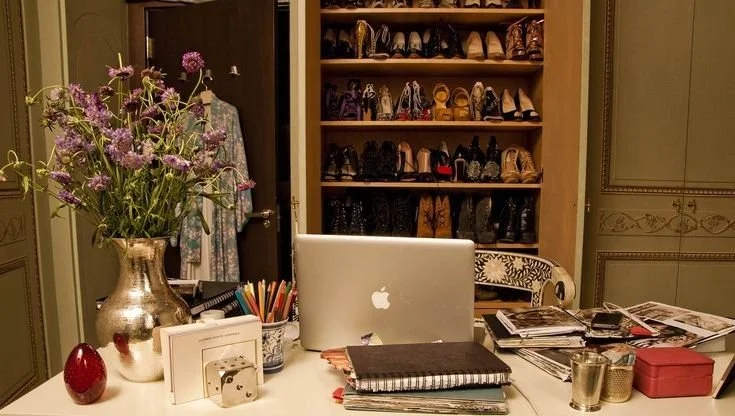
I've put effort into making my office somewhere I genuinely like being. You'll never catch me willingly using an overhead light, so for me that means lots of low lighting, a comfy chair and little things around my desk that make the room feel like home.
There is endless advice online about designing the perfect workspace for productivity, but I'm way more interested in designing one that is simply nice to exist in. I spend hours of my life in here. I want to look around and like it. Not everything in your working environment needs to make you more efficient, some things are allowed to exist purely because they make your day a little nicer.
3. Swap some of the short-form churn for long-form content
One of the biggest shifts for me has been experimenting with more long-form content. There is something about short-form content that can feel incredibly frantic. You post something and almost immediately have to start thinking about the next thing. A thought has barely left your brain before you're wondering how it performed and what you're going to feed the machine tomorrow.
Writing a blog post feels different. Recording a podcast episode feels different. There's space to follow an idea somewhere, tell the whole story and work out what you actually think without trying to package everything into a hook and seven slides. It feels slower and more intentional, which, ironically, can also make short-form marketing much easier.
One podcast episode can become clips, posts, an email and half a dozen other ideas. One blog post can give you things to talk about for weeks. You're creating something substantial first and letting the short-form content come from it, rather than constantly starting from scratch.
4. Take an actual lunch break (and do something completely offline)
I've recently become way more protective of an actual lunch break. This is particularly difficult for me because I have ADHD and I love what I do, which means if I'm properly absorbed in something, stopping can feel almost physically painful. “I'll just finish this first” has a habit of turning into 3pm, dehydrated and can’t feel my left bum cheek very quickly.
But our brain needs a chance to breathe, and annoyingly, scrolling Instagram or watching a productivity YouTube video while I eat doesn't really count. I try and spend 30-45 minutes doing something completely unrelated to work: working on a jigsaw, doing a bit of whatever craft project I'm currently obsessed with, reading or re-watching an episode of a comfort show.
Your mission - do something in the middle of a working day that has absolutely no potential to make you any money.
5. Actually use the freedom you built your business for
It's very easy to talk about flexibility as one of the great benefits of self-employment while also continuing to sit at your desk for 7 hours every single day because we've internalised the idea that that's what proper work looks like.
If it's unexpectedly sunny, I want to be able to go for the walk now rather than waiting until 5pm when it's raining again. I want to run errands at 11am when everywhere is quiet, work from a coffee shop because I fancy a change of scenery or finish early on a Friday when I've done everything that genuinely needs doing. I don't want to spend years building a flexible working life and then never actually flex it.
Those little things might sound insignificant, but together they change the texture of a working week. And I think that's really what romanticising your business is about - not making every moment aesthetically pleasing, but actually enjoying some of the freedom you worked so hard to create.
What happens when your business stops feeling like an emergency?
I don't think the biggest difference is that you suddenly become calmer, more productive and incredibly well-rested. I still have stressful days. I still spend far too long thinking about things that probably don't matter. I still occasionally fall into an Instagram hole and emerge convinced that everyone else has achieved greatness while I was making lunch.
But when I'm less caught up in the urgency of keeping up, I notice my own ideas more.
When you're constantly consuming other people's thoughts and immediately turning your own into content, there isn't much room for an idea to become anything. You're always reacting. You see what somebody else is talking about, notice what's trending, think about what you should be posting and compare what you're doing to everyone around you.
Slowing down gives your brain a chance to finish a thought.
You start making things because you're genuinely curious about them rather than because Tuesday's content slot needs filling. You can spend an afternoon going down a rabbit hole that doesn't have an obvious ROI. You can write something because you have something to say, not because you've identified the perfect keyword. You can let creativity be slightly inefficient again.
More than anything, I think your business starts to feel more like it belongs to you.
Most of us didn't start businesses because we desperately wanted to become incredibly efficient content production machines. We wanted autonomy. We wanted creativity. We wanted to choose who we worked with and what we worked on. We wanted mornings without a commute, the ability to go to the gym when it's empty, to walk the dog while the sun is out or spend a rainy afternoon at our desks making something we're proud of.
The business was supposed to support the life, not slowly swallow it.
Maybe slower marketing is part of the answer
I think this is partly why I've found myself so drawn to long-form content again.
For years, so much of online marketing has been about speed and volume. Make more, post more, keep showing up, stay visible. There is always another platform to feed and another piece of content disappearing down the timeline behind you.
Long-form gives me the opposite feeling.
A blog post doesn't stop existing because I haven't written another one tomorrow. A podcast episode can be found months or years after it’s recorded. Somebody can discover something I made long after I've forgotten about posting it and spend half an hour actually getting to know how I think.
Over time, those things become a body of work rather than another Instagram post that will basically cease to exist 48 hours from now.
You can tell stories, wander off on tangents, explain the nuance and let people hear your personality instead of trying to condense everything you know into a caption somebody will skim while waiting for the kettle to boil.
Then, if you still want to be on social media, that content can do most of the heavy lifting. That one conversation can become your clips, posts, emails and ideas instead of you repeatedly opening a blank Canva document wondering what the hell you're supposed to say today.
I'm not interested in disappearing from the internet or pretending I don't need to market my business. I just want to do it in a way that feels more human. I want to create things that have a little more permanence, spend longer with my ideas and build a body of work that still feels like mine when I look back at it.
Maybe that's what romanticising your business actually comes down to. Not candles or coffee shops or pretending every Tuesday is a scene from a Nancy Meyers film, try as I might. It's remembering why you wanted to work for yourself in the first place and deliberately building more of those things into the life you have now.
I want cosy afternoons writing at my desk, conversations that turn into ideas and work I'm genuinely proud to put my name on. I want enough space in my day to notice that the seasons are changing instead of only noticing that we've entered another quarter. I want a body of work instead of an endless feed, and a business that fits into my life instead of a life built around keeping my business alive.
And autumn feels like a pretty good time to start.
